China service robot industry: Guangdong to further support AI firms
China service robot industry: Guangdong to further support AI firms
By ZHENG CAIXIONG in Guangzhou | China Daily | Updated: 2025-04-11 09:05
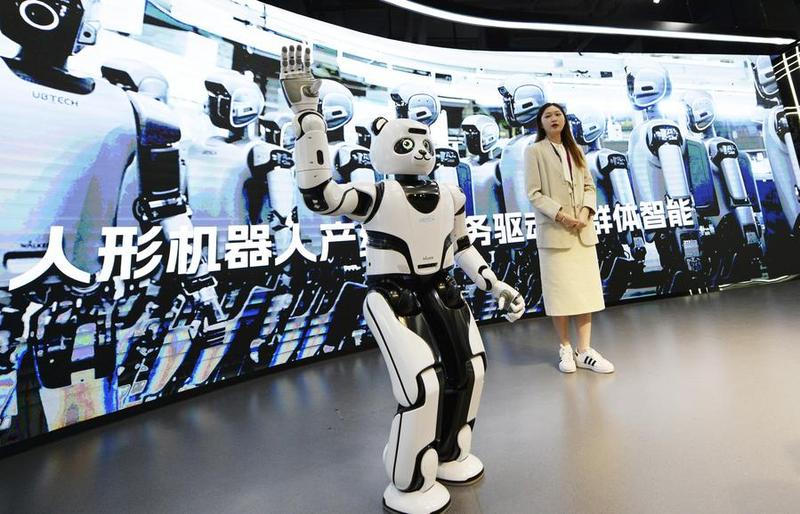
South China’s Guangdong province will spare no effort to support artificial intelligence and robotics companies in achieving breakthroughs in technology industrialization, product marketing and service commercialization in the coming months, a senior official said.
The latest move aims to continuously provide high-quality and affordable products and services for local companies as well as households, accelerating the empowerment of thousands of industries with AI and deepening the application of “robot+” scenarios, said Qu Xiaojie, deputy director of the Guangdong Department of Industry and Information Technology.
“Meanwhile, Guangdong, a global innovation center, sincerely welcomes scientists, entrepreneurs and young talent from around the world in the fields of AI and robotics to invest and develop the AI and robotics industry in the province,” he said.
Qu said that his department would ensure coordination of resources, cultivation of enterprises, industrial agglomeration, ecological optimization and promotion of exchanges to support innovation and development by enterprises in the AI and robotics industry in the province, which is also a major production base in the world.
Qu made the remarks at a news conference in Guangzhou, the provincial capital, on Wednesday.
Qu said Guangdong has potential to develop the AI and robotics industry, as the Guangdong-Hong Kong-Macao Greater Bay Area combines the advantages of electromechanical and digital intelligence technology, with a complete AI and robotics industry chain, complete support facilities, fast response, high quality, good service and excellent ecology.
The province, an economic powerhouse of the country, has become a mecca for global talent, technology and capital, he said.
Guangdong has excellent computing chips like the Huawei Ascend and self-developed general-purpose models like Tencent Cloud, according to Qu.
And the eight major models in the AI industry of Guangdong have been preliminarily applied in related fields and achieved significant results, he added.
Wang Jian, general manager of Tencent Cloud Guangdong province, said Tencent Cloud’s AI large model has been implemented in more than 30 industries, including government affairs, retail, finance and industry.
Tencent will continue to lower the technological threshold and focus on scenario implementation, using its “useful, easy-to-use, and reliable” AI capabilities to help Guangdong’s AI and robotics industry enter into an era of global, full-time and all-scenario intelligence, he said.
“And we have now launched Tencent Cloud Intelligent Computing Suite by integrating high-performance computing, storage, networking, acceleration suite, cloud native intelligent scheduling and orchestration capabilities, to help customers manage their economic accounts with computing power,” Wang said.
Hao Shengwei, marketing director of Huawei Ascend Computing Business, said Huawei Ascend has been focusing on key technologies and continues to innovate by combining computing, storage, networking and other capabilities.
“It has continuously improved its hardware and software capabilities, developed many fusion operators, and opened up many basic software and capabilities to partners for them to create their own applications and operators,” he said.
Hao said more than 80 partners have now built their large model application all-in-one machines based on Ascend’s computing power base, which have been applied in more than 200 enterprises.
“Many companies have built their own technology and computing power based on Ascend, and we will continue to make AI truly enter various industries,” he added.
Service Robots in China: Innovation, Market Growth, and Global Leadership
Service Robots in China: Innovation, Market Growth, and Global Leadership


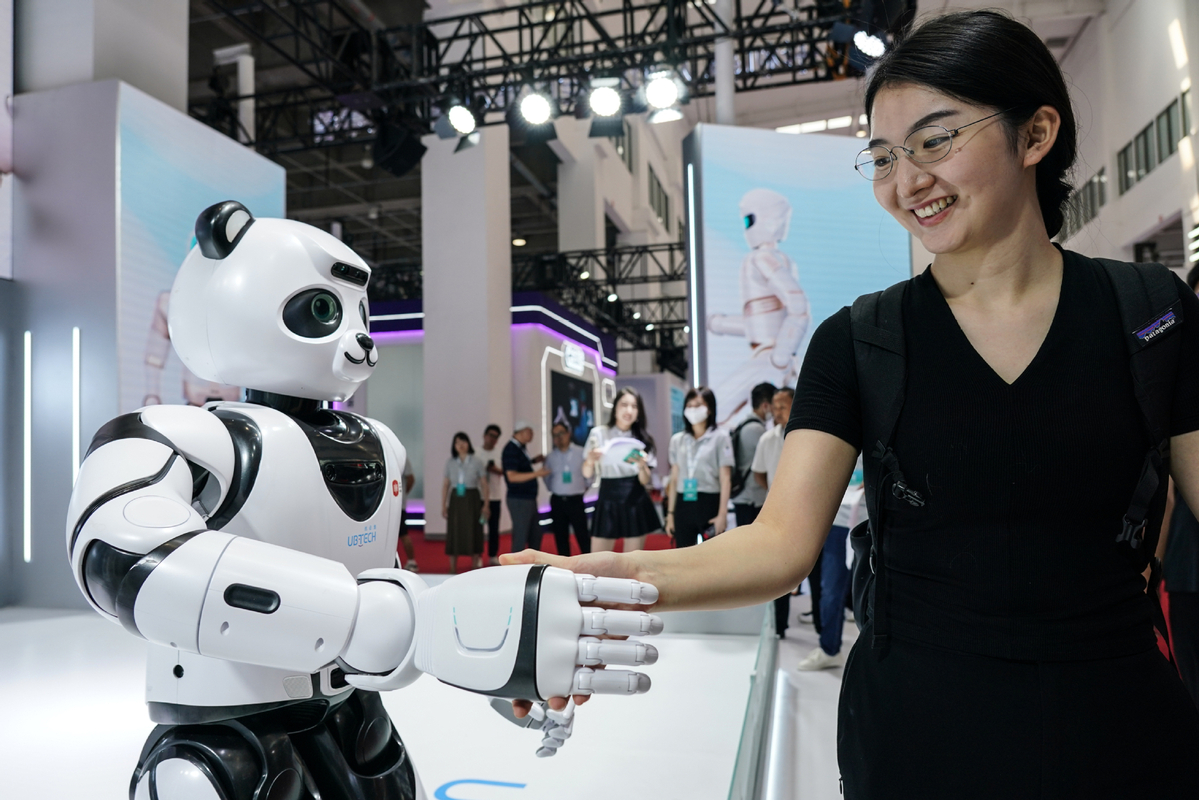
1. Market Overview: A Global Powerhouse
China has dominated the global robotics market since 2015, with service robots emerging as a key growth driver. Key statistics:
| Metric | 2023 Data | Projection (2028) | Source |
|---|---|---|---|
| Service Robot Market Size | ¥60 billion ($8.3B) | ¥150 billion | :cite[4]:cite[8] |
| Home Robot Penetration | 10% (urban) | 25% | :cite[4] |
| Export Revenue | ¥1.51B ($208M) | ¥4.2B | :cite[2] |
1.1 Growth Drivers
- Aging Population: 264M Chinese aged 60+ by 2025 needing elderly care robots :cite[4]
- Smart City Initiatives: 500+ cities deploying public service robots :cite[8]
- Manufacturing Evolution: 14.9% CAGR in mobile robots for logistics :cite[8]
2. Technological Breakthroughs

Image: R&D at Shenzhen Robotics Innovation Center (Source: China Daily)
2.1 Core Innovations
- 5G Integration: 1ms latency enables real-time control in hospital delivery robots :cite[8]
- Multi-sensor Fusion: Pudu Robotics’ VSLAM technology achieves 99.2% navigation accuracy :cite[2]
- Edge AI Computing: Cloud Whale’s J4 vacuum processes 15 TOPS locally for rapid decision-making :cite[2]
3. Sector-Specific Applications
3.1 Healthcare Revolution

Image: Disinfection robots at Wuhan Union Hospital (Source: Xinhua)
- 23,000+ hospital delivery robots deployed nationwide :cite[4]
- 40% reduction in nurse workload through AI triage systems :cite[8]
3.2 Retail & Hospitality
- 7,500+ restaurants using PuduTech’s BellaBot servers :cite[2]
- Hilton China’s 98% guest satisfaction rate with concierge robots :cite[4]
4. Global Expansion Strategies

Image: Canton Fair 2025 Service Robot Zone (Source: Sohu) :cite[1]
- 124 international trade delegations at 137th Canton Fair robotics zone :cite[1]
- Localization success: Yarbo snow robots capture 38% of North American market :cite[2]
- EU certification: Keenon Robotics meets 60+ country standards :cite[2]
5. Challenges & Future Outlook
5.1 Key Challenges
- 30% higher R&D costs vs international peers :cite[8]
- Semiconductor supply chain vulnerabilities :cite[7]
5.2 2025-2030 Predictions
- Human-robot collaboration: 70% of new models will feature cobot functions :cite[8]
- AI ethics framework: National standards under development :cite[7]
Conclusion
China’s service robot industry combines massive domestic demand with cutting-edge innovation, positioning the country as the global leader in intelligent automation solutions. With continued government support and industry collaboration, Chinese robotics firms are set to redefine service delivery worldwide.
Chinese robotics industry: Spotlight on AI as future game changer
Spotlight on AI as future game changer
China fostering own vision of development through reliable, efficient application of artificial intelligence tools across industry sectors
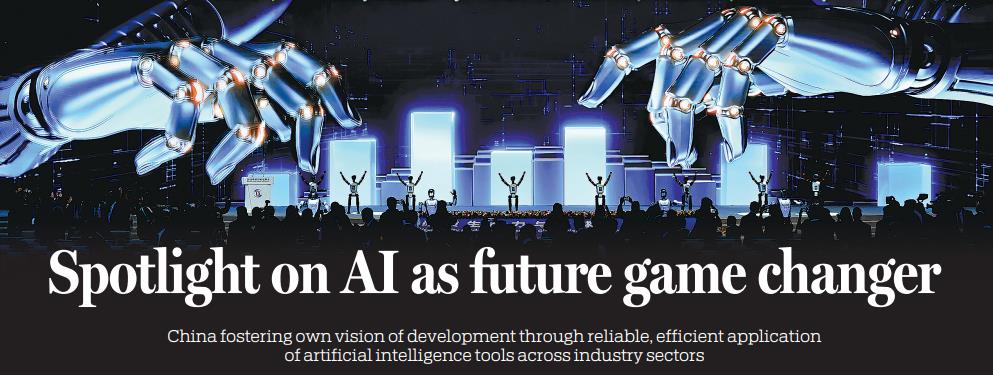
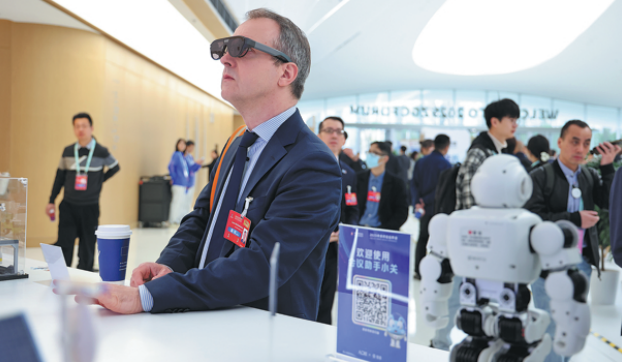
Delegates and visitors to the Zhongguancun Forum, a key technology event held in Beijing recently, were in for a surprise when they arrived at the venue late last month.
As they stepped in, they were greeted not by ushers in uniform, but by a coordinated team of robots that mimicked human expressions, answered queries and translated conversations in real time.
In the shadow of a series of bullying (tariffs) imposed by the Trump administration earlier this month, China is doubling down on what may be its most potent counterstrike: AI. From breakthrough chips to frontier models rivaling the West’s best to humanoid robots, China’s AI breakthroughs could stand out to be a potential game changer, industry experts said.
Elsewhere at the venue, a robot with a friendly voice and precise movements guided guests to a coffee corner where a robotic barista brewed fresh beverages. And, once the coffee was ready, another humanoid robot delivered it directly to the guest.
While other robots played chess with visitors or displayed their brush calligraphy skills with serene focus, some robotic dogs darted easily through the crowd of visitors.
This was just one of several events held last month where artificial intelligence took center stage.
In March, China saw a series of major events, including the two sessions, or the annual gatherings of the country’s top legislature and political advisory body; the Zhongguancun Forum; and the China Development Forum in Beijing, as well as the Boao Forum for Asia in Hainan province.
In fact, several AI-related panel discussions at the Boao and Zhongguancun forums saw packed houses, with attendees filling up every seat and some even standing to hear out the participants.
This overwhelming interest in AI mirrors the prominence of the nascent sector across the nation, displaying a vivid picture
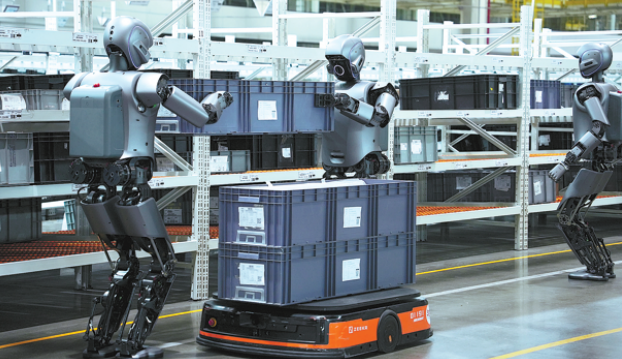
Industry experts said China is fostering its own vision for the development of AI through the reliable and efficient application of AI tools across a wide range of industries, a path that differs wisely from that of the United States.
Turing Award winner Joseph Sifakis said at the Zhongguancun Forum that China is crafting its own AI vision, distinct from that of the US.
“China has a solid and extensive industrial base and a unified domestic market. This enables the country to develop more reliable AI solutions that better align with the needs of the real economy, especially in the long-awaited transition to autonomous driving,” he said.
Sifakis noted that China’s strong industrial foundation, in particular, gives it an edge while industries such as self-driving vehicles, smart cities, smart factories and intelligent farms present more opportunities. “If developed well, (all these) will give China a dominant position in industrial AI,” he said.
Kai-Fu Lee, a prominent AI expert and chairman and CEO of investment company Sinovation Ventures, said China has reached its “DeepSeek moment”. He predicted that 2025 would mark a breakout year for AI applications and large-scale model deployment in China.
Lee recalled that about nine months ago, he had expressed frustration over China’s lack of a “ChatGPT moment”, as promising Chinese AI models at the time failed to stand out and spark nationwide adoption.
“However, DeepSeek has changed that landscape. Its success has awakened the Chinese market, ushering in a new AI era for the country,” he said.
According to Lee, DeepSeek’s rise proves that “closed-source AI has no future”, and only open-source development will drive greater progress.
“As AI scaling laws shift from the pretraining stage to the inference stage, AI applications will accelerate exponentially this year,” he said.
Scaling laws describe how the performance of AI systems improves as the size of the training data, model parameters or computational resources increase.
Kuang Ziping, founding partner of Qiming Venture Partners, a toptier Chinese venture capital firm, echoed that sentiment.
While the first generation of AI saw fragmented innovation, the second generation — dubbed “AI 2.0” — will be built on infrastructure, scalability and real-world application, he said.
“There’s still a huge gap in foundational infrastructure investment,” Kuang said. “But the application layer is poised for explosive growth.”
From smart education and autonomous driving to embodied intelligence and hardware, he said the sectors that successfully integrate AI will define the future.
Zhu Xiaohu, managing partner at GSR Ventures, emphasized that generative AI must prioritize one principle above all — application is king.
Startups, he said, must embrace open-source ecosystems and rapidly iterate their products in vertical industries. The most effective businesses, he predicted, will not rely on AI alone, but on “AI plus human” hybrid models that combine intelligence with nuanced delivery capabilities.
As excitement around AI innovation builds in China, it also collides with geopolitical headwinds, especially after the nation, a major trading partner of the US, was hit with several rounds of so-called reciprocal tariffs since April, in addition to a 20 percent tariff imposed earlier this year.
Last month, the US also added dozens of additional Chinese entities, including the Beijing Academy of Artificial Intelligence and tech firm Inspur Group, to its export restrictions list.
But, the world is big enough for hundreds of countries, including the US and China, to codevelop AI, and Washington’s sanctions on high-tech sectors will only steel Beijing’s resolve to drive homegrown innovations, said industry experts and company executives.
During a panel discussion at Boao Forum for Asia, Zeng Yi, a member of the United Nations’ high-level advisory body on AI and a researcher at the Chinese Academy of Sciences’ Institute of Automation, said: “The future of AI is not decided by a handful of countries, but by nearly 200 countries and regions. The world is big enough to embrace both the US and China to codevelop AI.”
Zheng Yongnian, dean of the School of Public Policy at the Chinese University of Hong Kong (Shenzhen), criticized as “unwise “the inclusion of Chinese companies in restrictive measures aimed at hindering China’s AI progress.
“China possesses significant advantages in application scenarios, with the government actively promoting the AI Plus strategy to expedite technological implementation. US sanctions on technologies have, paradoxically, spurred China to intensify investments in these areas and foster indigenous innovation,” Zheng said.
“If China’s AI technologies continue to evolve at the current pace, the US might find itself relying on China’s original innovations in certain sectors within 10 to 15 years,” he added.
Carl Fey, a professor of strategy at BI Norwegian Business School, said that while US tech restrictions may cause short-term pain for China, they will ultimately compel the latter to fortify its technological base and sharpen its global competitiveness.
Fey warned that measures like tariffs and export bans not only slow global tech progress, but also backfire by accelerating domestic innovation.
A group of experts cited Deep-Seek as a case in point — a low-cost, open-source AI model that is transforming the industry landscape. DeepSeek’s accessible architecture enables rapid deployment, and widespread use may reshape the AI future globally, a vision where AI, like water or electricity, becomes a basic utility available to everyone.
Jiang Xiaojuan, a professor at the University of Chinese Academy of Social Sciences, said that Deep-Seek is breaking monopolies and ushering in a new era of vigorous competition, converting technical know-how into industrial might.
“In a competitive market, these challenges will naturally be resolved by the forces of the market itself,” Jiang said.
Gao Xuefeng, founder and CEO of AI data infrastructure company Fabarta, said that after DeepSeek’s breakthrough, many Chinese companies no longer hesitate to invest in AI.
“Every few months, new technological advancements emerge. Companies can’t afford to wait; they must integrate AI into their business and industry now,” Gao said, adding that every sector in China can be re-imagined through AI in the coming years.
Amid rising AI enthusiasm, Wang Zhongyuan, head of the Beijing Academy of Artificial Intelligence, a leading nonprofit AI institute, said that DeepSeek has indeed delivered impressive results, proving that China can train large-scale AI models parallel to ChatGPT 4 despite limited computing power.
Regarding artificial general intelligence, in which an AI system can match or exceed the cognitive abilities of humans in any real-world task, Wang said that the industry is still far from achieving such capabilities. “I think we are still at least five to 10 years, or even longer, from reaching that level,” he added.
Kuafu humanoid robot debuted at Huawei Developer Conference, Robot 100ETF(159530) rose 2.67%
Kuafu humanoid robot debuted at Huawei Developer Conference, Robot 100ETF(159530) rose 2.67%

Robot 100ETF (159530) : Tracking the national Certificate robot industry Index, selecting listed companies whose business scope belongs to the robot industry as samples to reflect the market performance of the robot industry. As of 14:44 on June 26, 2024, the Robot 100ETF (159530) was up 2.67%.
On the news, the Huawei Developer Conference (HDC2024) was officially opened recently, and showed the outside world the generalization application potential of Kuafu humanoid robot equipped with a large model in industrial and home scenes. Kuafu humanoid robot is a phased achievement achieved since the strategic cooperation between Huawei Cloud and Leju Robot. Through the access of “Pangu Embodied intelligent large model”, the humanoid robot has been improved in intelligence and generalization ability, which is an important step for the intelligent development of humanoid robots in China.
Tianfeng Securities believes that the downstream market of humanoid robots is expected to expand, and under the ability of all sectors of society, with the upgrading of technology and the development of industrial form, humanoid robots are expected to penetrate into service, manufacturing and other application fields, and the market potential will accelerate the release.
Related products:
Robot 100ETF (159530) : Tracking the national Certificate robot industry Index, selecting listed companies whose business scope belongs to the robot industry as samples to reflect the market performance of the robot industry. As of 14:44 on June 26, 2024, the Robot 100ETF (159530) was up 2.67%.
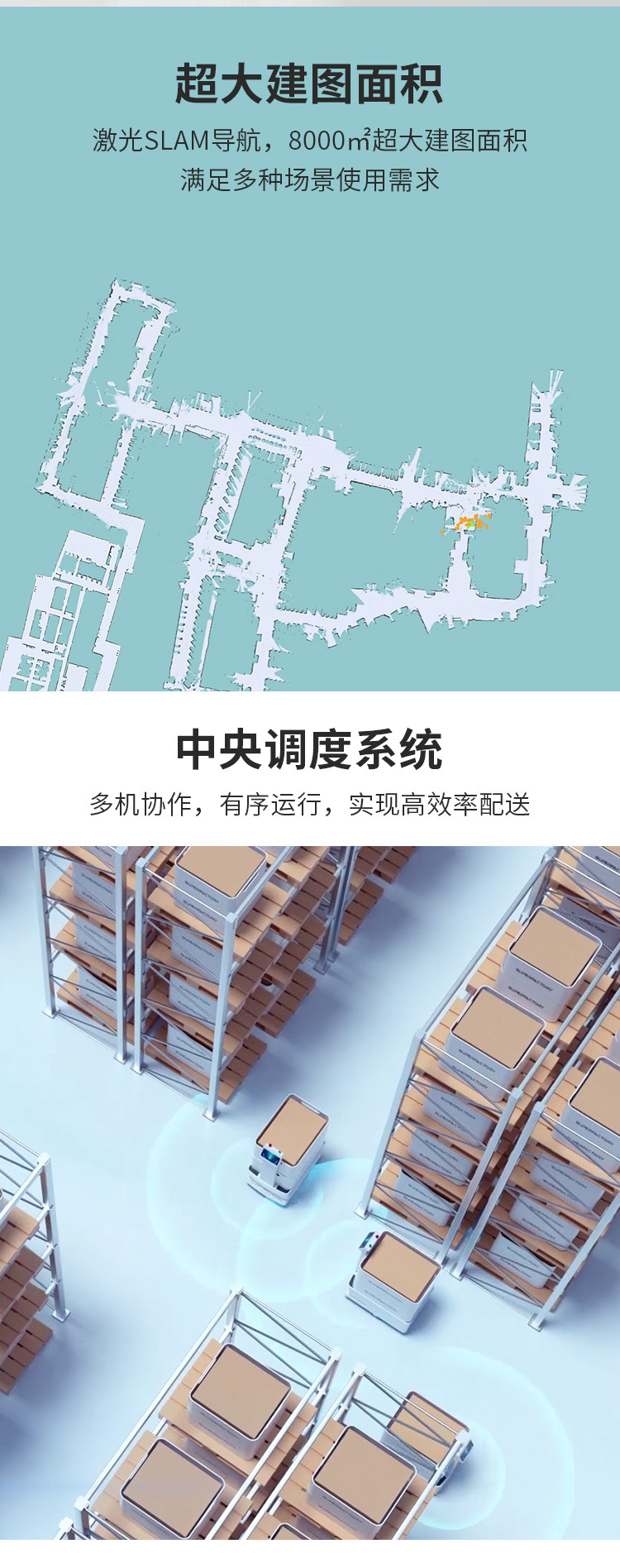
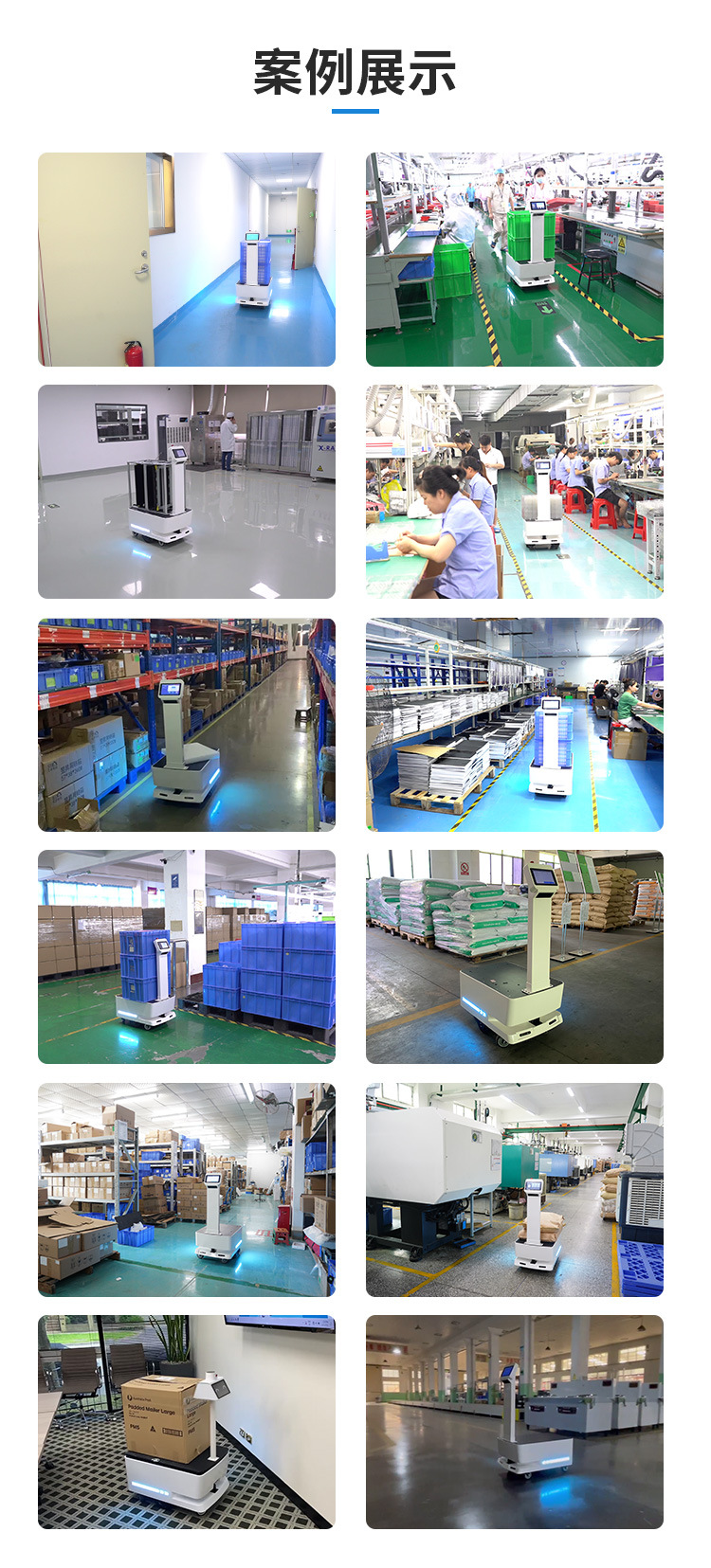
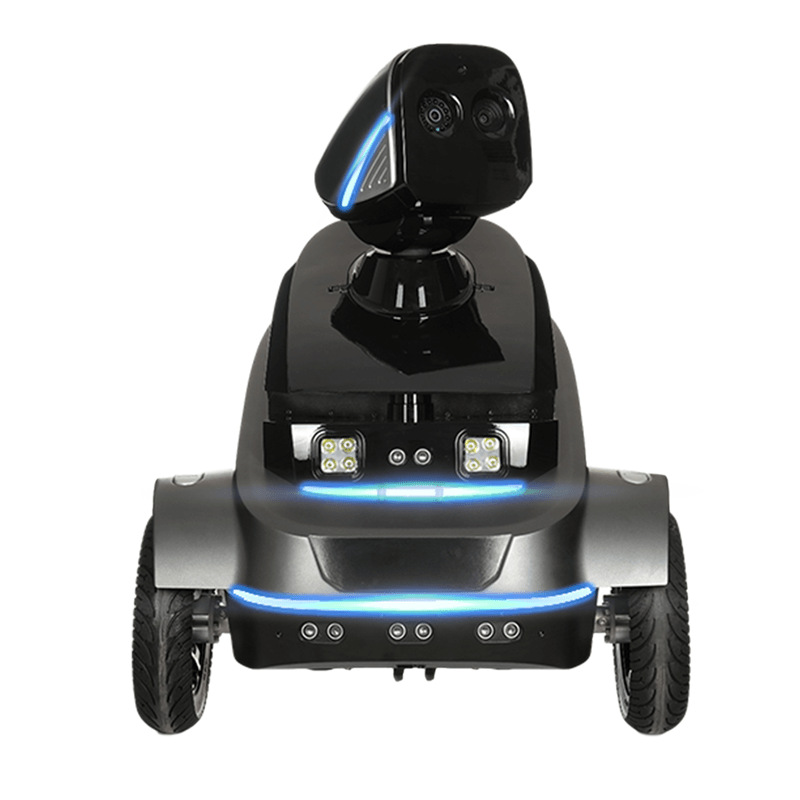
Intelligent robot autonomous obstacle avoidance trackless autonomous driving factory handling intelligent distribution robot parts
Intelligent robot autonomous obstacle avoidance trackless autonomous driving factory handling intelligent distribution robot parts
Intelligent robot autonomous obstacle avoidance trackless autonomous driving factory handling intelligent distribution robot parts
Battery type
Phosphate process
Article No. (Article number)
DBOT12B
Battery capacity
DBOT12B
Interface type
USB
Memory capacity
8GB
brand
REEMAN /REEMAN
Screen size
Seven inches
Applicable age
18 +
Apparent dimension
704mm*470mm*1148mm
Model number
DBOT12B
Product weight
55 kg
Applicable population
Factory workshop logistics warehouse distribution robot
Time to market
2023
After-sales service
One year warranty
Operating system
Android7.0 or above
Additional function
Intelligent obstacle avoidance
Whether touch screen
is
Language support
Chinese (Simplified, Traditional), English, Japanese, Korean
Type of supply
The original factory
The fastest shipping time
Ten days
invoice
VAT invoice
Packing list
Robot *1. Charging adapter *1. Instructions
Ability cultivation
mapping
colour
attachment
Whether cross-border export is a source of goods
no
Whether the source of patent goods
no


Scan to add us on WeChat
Click to copy WeChat ID